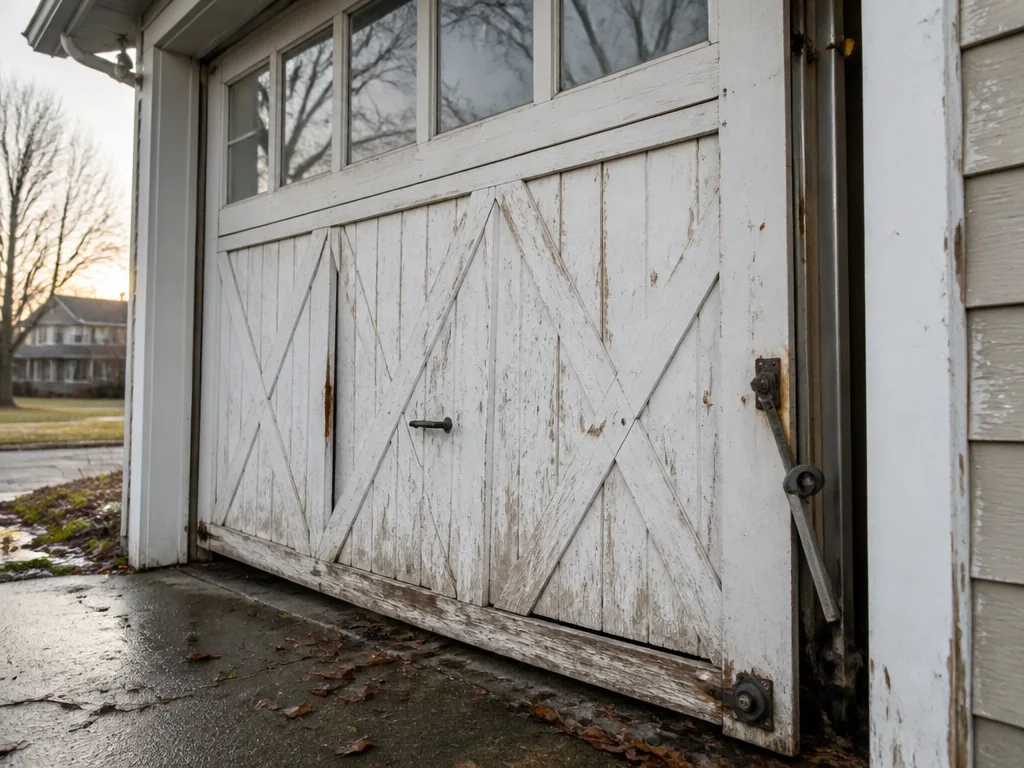
Carriage style garage doors look solid. Heavy wood grain or steel panels with those decorative strap hinges and faux handles give the whole house some curb appeal. But underneath all that charm is the same hardware every garage door uses: springs, cables, rollers, a track, and an opener. When one piece starts to fail, the door usually tells you before it quits altogether. Here's what we see most often across Ohio, and what each sign tends to mean.
The door sounds wrong when it moves
A little noise is normal. A door that sounds like a bag of gravel rolling downhill is not. Grinding or scraping from the track usually means rollers are worn or the track has come out of alignment, sometimes from a bump by a car mirror or a kid's bike. Rollers with nylon wheels can flatten over several winters, and that flat spot will make a thumping sound every time it passes over a joint.
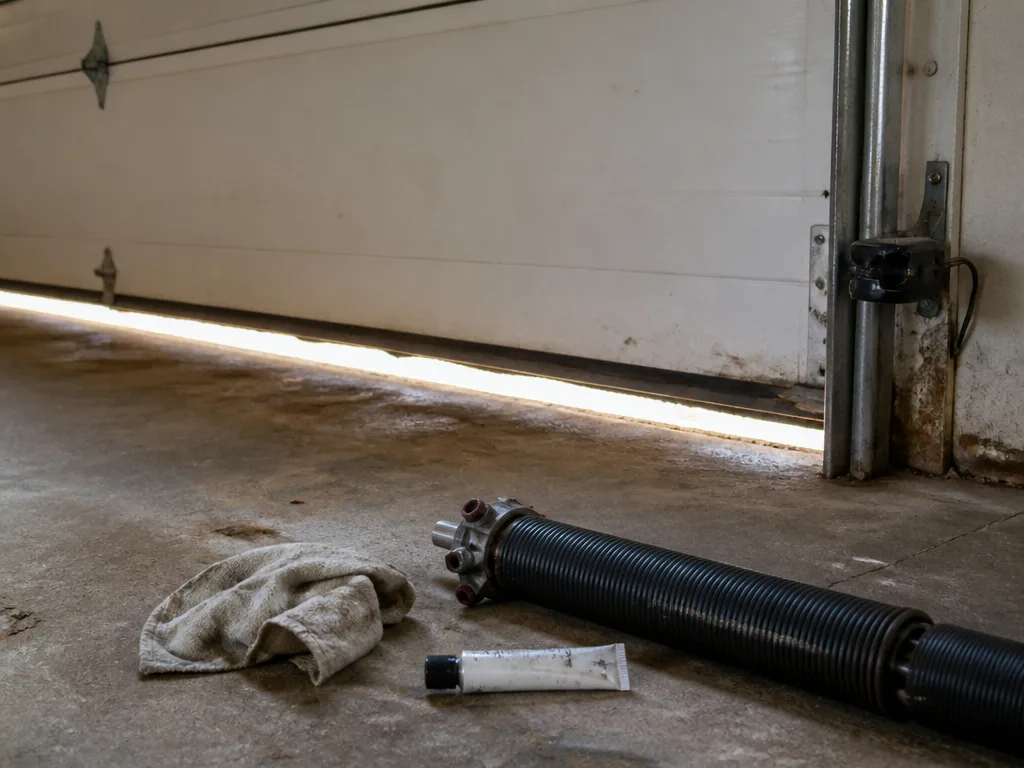
A sharp bang or loud crack from the top of the door is a different story. That usually points to a torsion spring that has broken. You'll often find the door sitting lower than normal, and it may feel heavy when you lift it by hand. Don't try to wind or adjust a spring yourself. Those springs hold a lot of tension, and a garage door technician should handle them.
Squeaking is the easiest to fix and the easiest to ignore. A dry hinge or roller shaft can squeak for months before it starts grinding. If the squeak has turned into a shriek, the bearings may already be going.
The door sags, tilts, or rides crooked
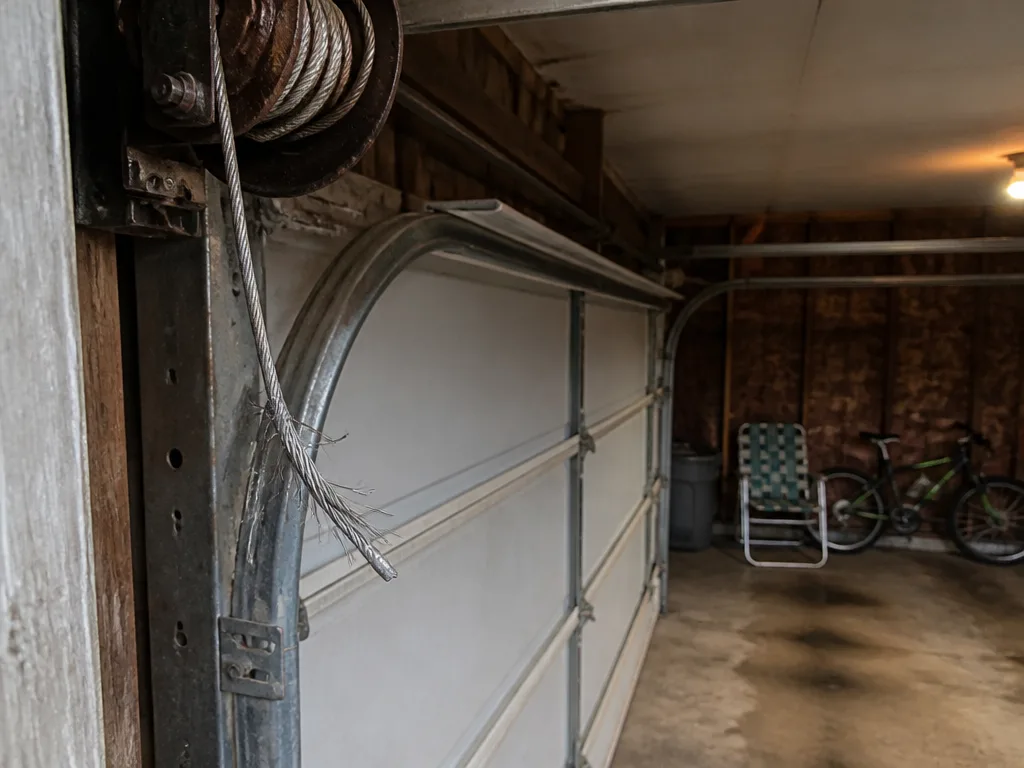
Stand inside the garage and look at the bottom edge of the door while someone runs the opener. If one side sits lower than the other, or the door looks like it's leaning, check the cables first. A cable that has slipped off its drum or frayed will let one end drop while the other stays up. That's a fast fix when caught early, but a door that keeps running with one cable loose can damage the track, the drum, and the opener itself.
Gaps that open up at the bottom corners or along the sides often point to the same cable problem or to worn end brackets. On carriage doors with decorative bracing, check whether the horizontal braces have shifted. A bent brace can pull the panels out of square, and that pressure shows up as light gaps and uneven movement.
Sagging in the middle of a wooden section is its own issue. Moisture soaks into the panel, the wood swells, and the section starts to bow. Once a panel bows, the rollers push against it unevenly, which adds stress to the whole door. Catching this before the panel cracks saves the panel.
The door acts strange when you try to close it
Modern openers have safety sensors low on each side of the door. If the door starts closing and then goes back up, the sensors may be blocked by dust, spider webs, or a shifted bracket. Clean the lenses and make sure the two sensors line up. If the door still reverses, the sensor wiring or the alignment needs a closer look.
A door that stops halfway or refuses to close all the way often has a travel limit that needs adjusting. The opener learns how far to travel, and after a spring change or a cable repair, those settings can drift. Some doors also stop because the track is bent just enough to bind the rollers. You'll hear it straining before it stops.
The opener motor running while the door stays put is one more sign to take seriously. That usually means the trolley has disconnected from the rail, or the drive gear has stripped. Pulling the emergency release and lifting the door manually will tell you whether the door itself is moving freely, but don't leave the door in the disconnected position for long. Someone could come in from the outside and walk right under it.
Quick checks you can do safely
- Close the door and look for daylight around the edges and bottom seal. Light means the weatherstripping has worn or the door is out of square.
- Run the door slowly and listen for scraping, thumping, or squeaking. Note which side the sound comes from.
- Check the sensor lenses for dirt and make sure the indicator lights are steady.
- Look at wood panels for soft spots, peeling paint, or dark staining near the bottom rail.
- Keep the door closed while you inspect it, and never stand under it while it's moving.
The wood and finish start to show their age
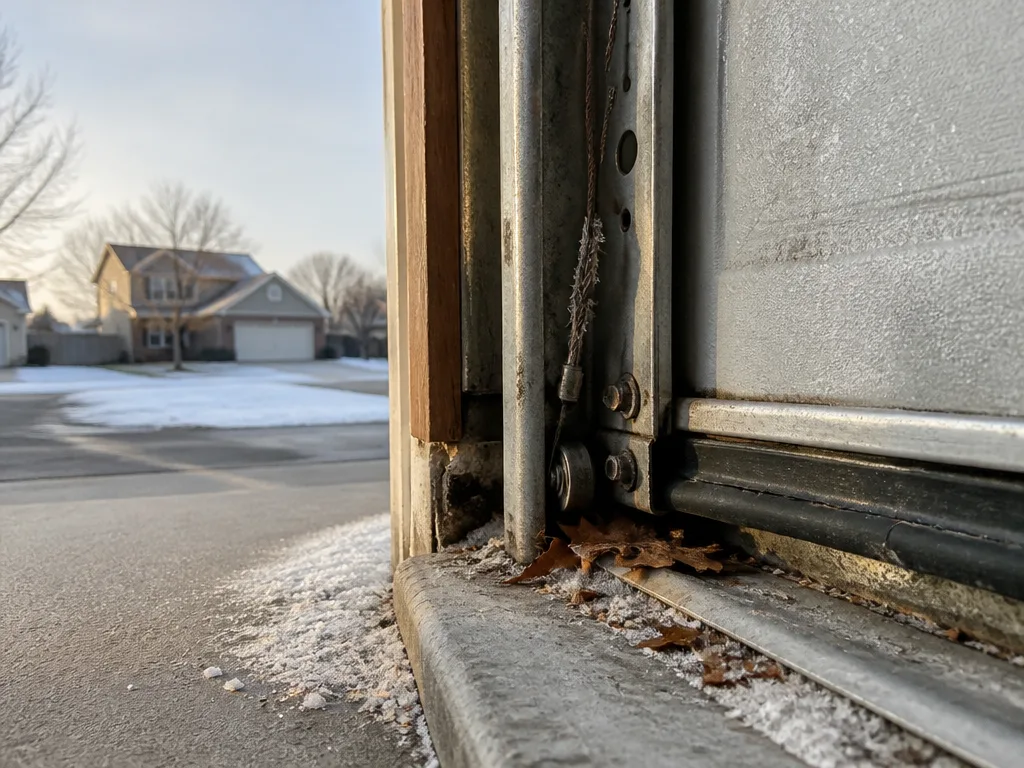
Carriage doors take a beating from Ohio weather. Snow piles against the bottom, spring rain soaks the lower panels, and summer heat dries everything out again. Over time, that cycle opens up the seams. Look at the bottom rail and the joints between panels. Dark streaks, soft wood, or paint that lifts in sheets all point to water getting in.
Water damage doesn't stay in one spot. Once the bottom rail softens, the hinges and brackets start pulling loose, and the door's weight shifts onto the rollers and cables in new ways. A repair that might have been a new seal and some paint can grow into a panel replacement if you wait a season or two.
Hardware rust is the quieter warning. Rusty strap hinges, corroded bolts, and flaky decorative handles mean the metal is losing its grip. Replacing the worst pieces and cleaning the rest keeps the door tight and quiet, and it's cheaper than tracking down the damage a loose hinge leaves behind.
What to do next
If one of these signs matches what you're seeing, don't wait for the door to fail on a cold morning. Write down what you noticed, which side it happened on, and whether it's getting worse. That kind of detail helps a garage door technician figure out the cause faster.
Garage Door Repair North Ridgeville works with homeowners all over Ohio, from the Lake Erie shoreline down to the southern counties and out across the farm country. Our crews handle carriage style doors in wood, steel, and composite, and we can talk through what your door is doing over the phone before anyone drives out. Give our office a call and describe the sound, the sag, or the stop you're seeing. We'll tell you what it usually points to and what the next step looks like.