Most people don't think about their garage door until it stops working. Then it's a rush call, a door stuck halfway up, and a conversation about whether the whole thing needs replacing. Here at Garage Door Repair North Ridgeville, we see that pattern all over Ohio. The good news is that a lot of the expensive surprises start as small, boring problems that nobody noticed. Catch those early and you can often push a full installation years down the road.
This checklist is written for homeowners anywhere in the state, whether you're in a older house with a single-car door or a newer place with a wide double. Work through it once or twice a year. You don't need special tools for most of it, and nothing here requires you to climb a ladder or touch anything under high tension.
Start With the Moving Parts You Can Actually See
Walk out to the garage, close the door, and look at the hardware before you do anything else. Loose bolts are the first thing to check. Vibration from daily use works bolts loose over time, especially at the bracket where the track meets the wall and along the top section where the rollers sit. Snug them with a socket set, but don't crank them down so hard that you strip the threads.
Next, look at the rollers. Nylon rollers that have gone flat, cracked, or grooved will make the door bump and grind. Steel rollers can rust and seize. Replacing a worn roller is cheap compared to what happens when a bad roller lets a panel jump the track. If you see a roller with a flat spot, swap it before the next cold snap.
Hinges deserve a look too. Check each one for cracks around the rivets and for any panel that has started to sag or separate from its neighbor. A sagging section puts uneven load on the rest of the door, and that uneven load is how small problems start multiplying.
Lubricate, Clean, and Keep the Track Clear
Lubrication is the cheapest maintenance you'll ever do, and it's the one most people skip. Use a silicone-based or lithium-based lubricant made for garage doors. Avoid heavy grease and cheap all-purpose oils, because they attract dust and grit that grind the rollers down. Work the lubricant into the roller bearings, hinge joints, and the spring coils, but keep it off the track surface itself, where it collects dirt and makes the rollers slip.
Speaking of the track, wipe it clean. Dirt, leaves, and the odd bit of road grit build up along the bottom edge, and that buildup can throw off the rollers. Run a dry cloth down the inside of each track section and check that nothing is sitting in the path of the door. Bikes, paint cans, and holiday decorations have all caused more trouble than you'd guess.
- Tighten track brackets and hardware every six months.
- Check roller condition and replace any that are cracked, flat, or rusted.
- Lubricate rollers, hinges, and spring coils with a garage door lubricant.
- Wipe down both tracks and remove any debris from the door path.
Test the Safety Features Every Month
Your opener has built-in safety features, and they only work if you test them. Once a month, put a standard item like a two-by-four flat on the floor in the door's path, then close the door using the wall button. If the door doesn't reverse when it meets the wood, the auto-reverse setting needs adjusting or a technician from our team should look at it. Don't ignore this one. A door that won't reverse is a hazard to kids, pets, and anyone standing underneath.
Now check the photo eyes, the two small sensors mounted near the floor on each side of the opening. They should face each other, and their indicator lights should be steady. Wipe the lenses with a soft cloth, because a film of dust can make the door think something is in the way. If the door keeps reversing for no reason, misaligned or dirty photo eyes are the usual culprit.
A quick monthly test you can do yourself
Pull the emergency release cord from inside the garage with the door closed, then lift the door by hand. It should feel reasonably balanced and stay put when you let go partway up. If it drops fast or shoots up, the springs may be losing tension, and that's a job for garage door professionals rather than a weekend project.
Look Up at the Springs and Cables, But Don't Touch Them
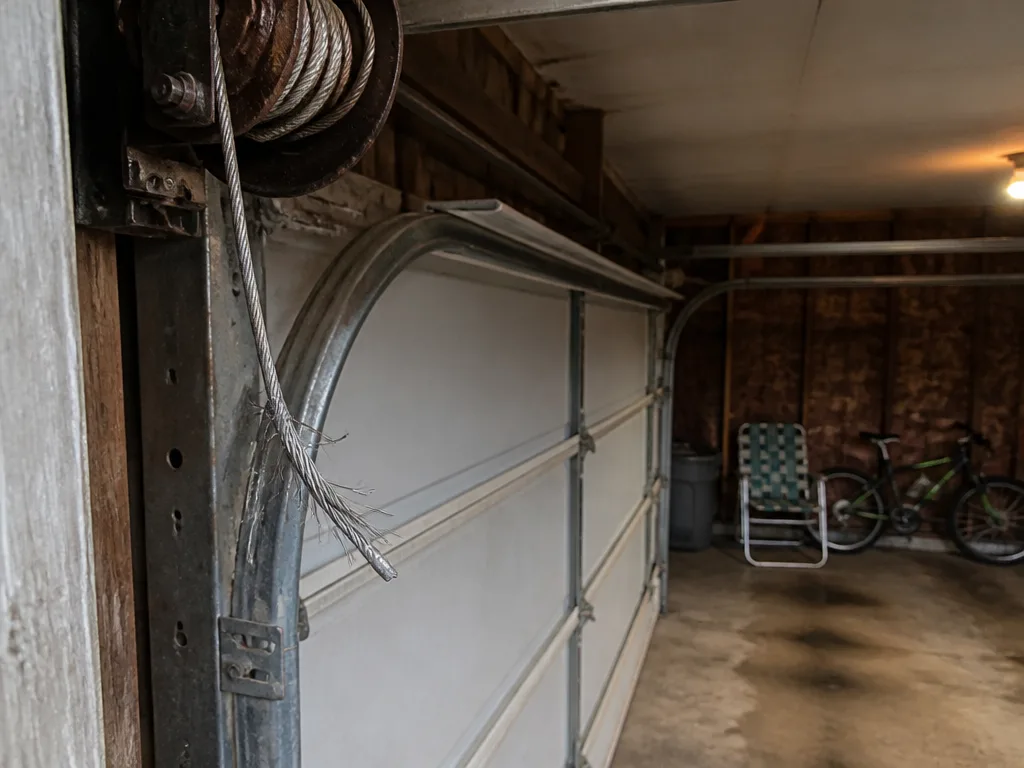
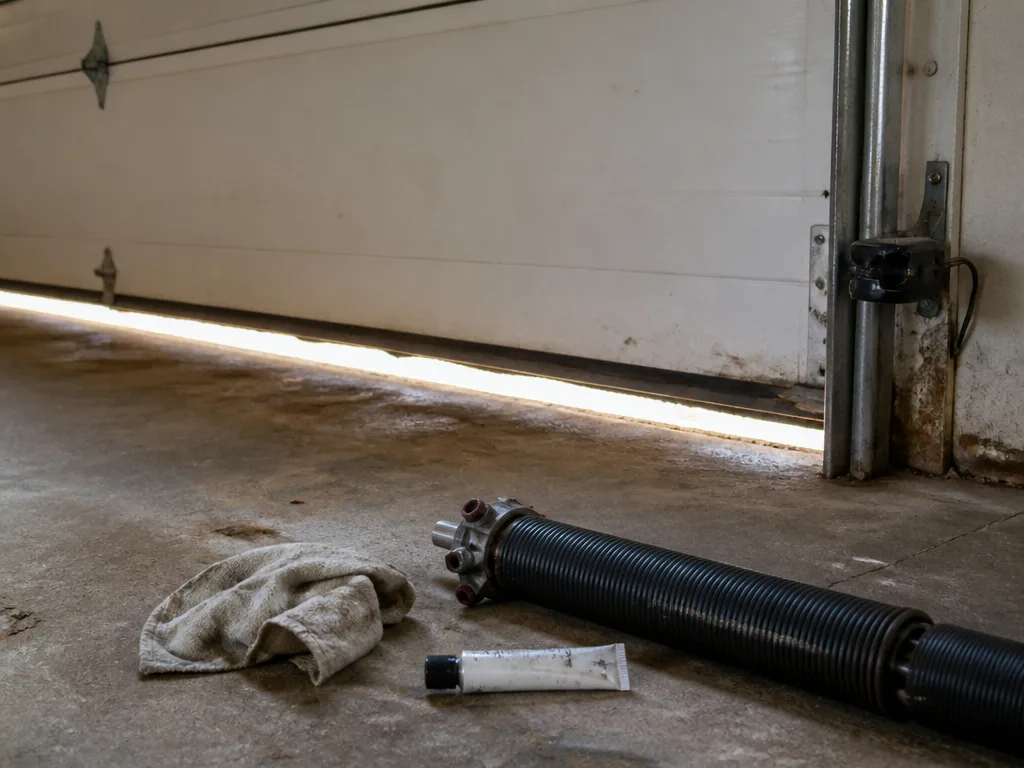
Torsion springs and lift cables do most of the heavy lifting in your door, and they're the parts that can cause serious injury when they fail. The rule here is simple: look, don't touch. Glance at the spring above the door for gaps between coils, rust that has eaten into the metal, or a spring that looks stretched out of shape. Check the cables for fraying, kinks, or strands poking out. Any of those signs means a call, not a repair.
Springs wear out after a number of cycles, and that number depends on the spring and how often the door opens. A spring that has started to lose tension will make the opener strain, and an opener that works too hard shortens its own life. Catching a tired spring early often means you avoid a second failure that damages the opener or the door panels.
Seal the Gaps That Let the Weather In
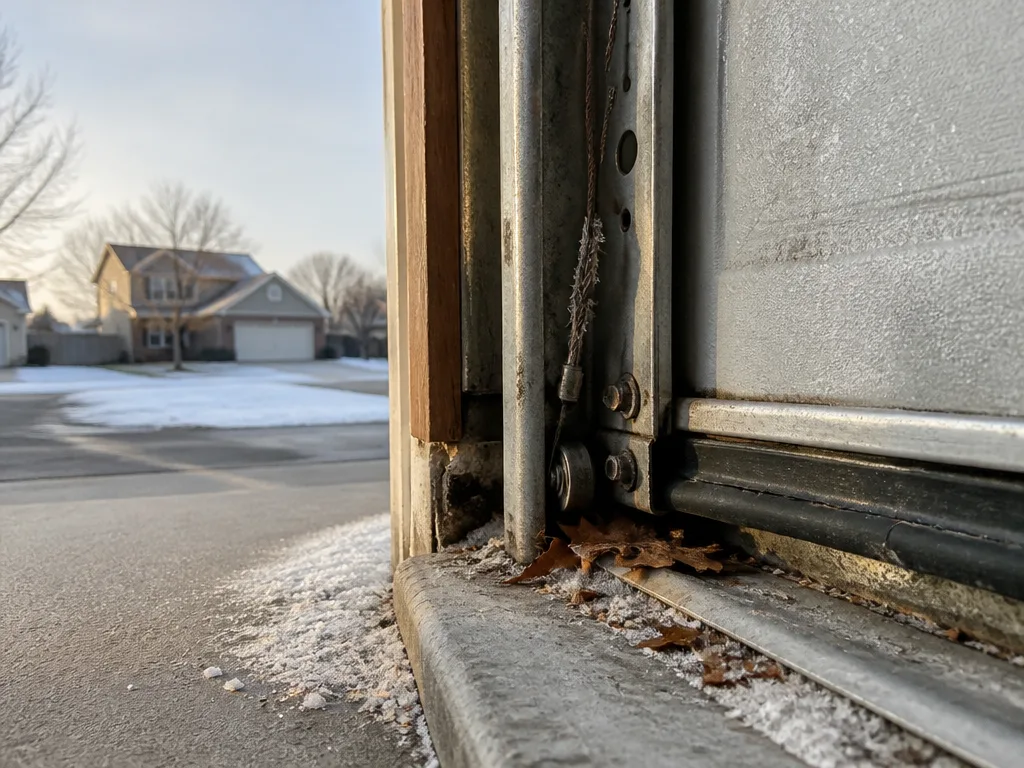
Ohio winters are hard on garage doors. Freezing rain gets under the bottom seal, and that moisture expands and cracks the seal, the rubber gaskets, and sometimes the lower panels. Look along the bottom edge when the door is closed. If you can see daylight, or if a dollar bill slides through with no resistance, the bottom seal needs replacing. A worn seal lets cold air into the garage, lets water pool at the threshold, and invites rust on the lowest hardware.
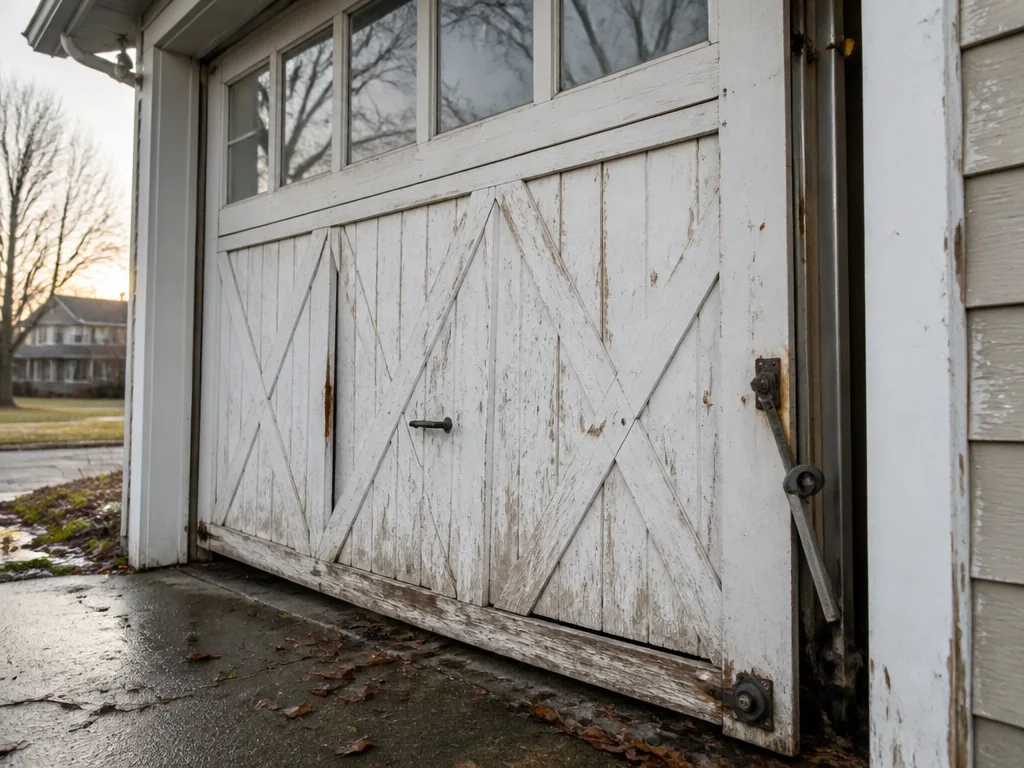
Check the side and top weatherstripping too. Stiff, brittle strips crack and peel away from the frame. Replacing them is a simple job and usually costs far less than the water damage that follows a leaky seam. Wood doors need extra attention. Look for soft spots, swelling, or peeling finish on the bottom panel, and keep the finish sealed so moisture doesn't get into the grain.
When to Call Us Instead of Waiting
Some warning signs mean you should stop checking and start calling. Grinding that gets worse each week, a door that pops or jerks at the top of its travel, a panel that bows or separates, and any spring or cable that looks damaged all belong in the call-now column. Waiting on those problems usually turns a repair into a much bigger job.
We work with homeowners across Ohio, and we're happy to talk through what you're seeing over the phone. Describe the sound, tell us which part of the door is acting up, and let us help you figure out whether it needs a repair visit or just some adjustment. Give us a call and we'll point you in the right direction. Keeping up with this checklist won't stop every garage door problem, but it gives you a fighting chance of putting off installation for a long time.